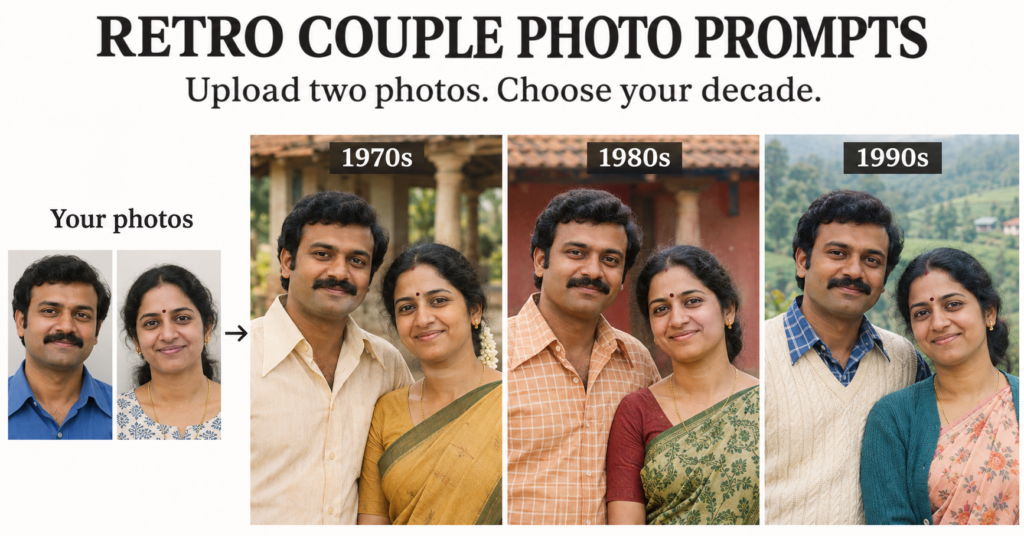
1. 1970s Couple Portrait on a Village Veranda
Use the two uploaded photos as separate identity references. Image 1 is the husband and Image 2 is the wife. Preserve each person's recognizable facial structure, eyes, nose, lips, skin tone, natural age, hairline and body build. Keep their identities separate and retain their individual facial details.

Create a photorealistic South Indian couple portrait inspired by a quiet afternoon in 1974. Place us together on the shaded veranda of a modest tiled-roof house, with a wooden doorway, limewashed walls and a woven cane bench. The husband wears a cream wide-collar shirt tucked into brown trousers. The wife wears a muted mustard cotton saree with an olive border and a simple short-sleeved blouse. Give her a softly arranged braid that respects her original hairline.

Have us sit close together with relaxed shoulders, each person's hands resting separately on their own lap. Both look toward the camera with small, comfortable smiles. Keep our faces at a similar distance from the lens.

Use soft afternoon daylight, warm but realistic skin tones, faded earth colours and restrained 35mm colour-film grain. Show natural cotton creases and slight wear in the wood. Compose a vertical 4:5, knee-up portrait with the house visible around us.

Keep both faces clearly visible and naturally proportioned, with realistic skin texture, aligned eyes, believable hands and physically correct clothing. Create exactly one photograph containing the two referenced adults. Exclude extra people, modern devices, artificial beauty smoothing, captions, logos and decorative borders.
2. 1970s Black-and-White Couple Studio Photo
Use the two uploaded photos as separate identity references. Image 1 is the husband and Image 2 is the wife. Preserve each person's recognizable facial structure, eyes, nose, lips, skin tone, natural age, hairline and body build. Keep their identities separate and retain their individual facial details.

Create a realistic black-and-white Indian studio portrait inspired by 1972. Use a plain fabric backdrop, a wooden chair and a simple floor. Seat the wife comfortably on the chair and position the husband beside her, slightly turned toward her while both face the camera. His hand rests on the chair back, clearly separated from her shoulder. Her hands rest naturally together on her lap.

Dress the husband in a neatly pressed light shirt with a broad collar and high-waisted dark trousers. Dress the wife in a cotton saree with a fine woven border and a modest blouse. Use restrained jewellery and period-inspired grooming while maintaining their recognizable hairlines and existing facial hair.

Light the faces softly from one side with gentle fill on the other. Produce rich grey tones, visible fabric texture and fine photographic grain. The print should look carefully preserved, with clear facial details and understated contrast. Use a vertical 4:5 composition showing both people from head to below the knees.

Keep both faces clearly visible and naturally proportioned, with realistic skin texture, aligned eyes, believable hands and physically correct clothing. Create exactly one photograph containing the two referenced adults. Exclude extra people, modern devices, artificial beauty smoothing, captions, logos and decorative borders.
3. 1970s Countryside Walk with a Bicycle
Use the two uploaded photos as separate identity references. Image 1 is the husband and Image 2 is the wife. Preserve each person's recognizable facial structure, eyes, nose, lips, skin tone, natural age, hairline and body build. Keep their identities separate and retain their individual facial details.

Create a photorealistic Indian countryside couple photograph inspired by 1977. Place us on a narrow village lane beside green fields, low stone boundaries and a distant tiled-roof house. The husband walks slowly while pushing a classic steel roadster bicycle by the handlebars. The wife walks beside him on the opposite side of the bicycle, with both bodies and faces clearly separated.

Dress him in a pale blue short-sleeved wide-collar shirt and dark brown trousers. Dress her in a rust cotton saree with a small cream print and matching blouse. Keep the saree safely clear of the bicycle wheels and chain. Add simple sandals and discreet period-appropriate accessories.

Capture the moment we pause and turn toward the photographer, sharing an easy smile. Use an eye-level perspective, natural morning light, muted greens, warm colour-film response and light grain. Preserve realistic bicycle geometry, two complete wheels and correct contact between his hands and the handlebars. Compose vertically in 4:5, keeping both faces large enough to recognize.

Keep both faces clearly visible and naturally proportioned, with realistic skin texture, aligned eyes, believable hands and physically correct clothing. Create exactly one photograph containing the two referenced adults. Exclude extra people, modern devices, artificial beauty smoothing, captions, logos and decorative borders.
4. 1980s Morning Coffee and Radio Couple Photo
Use the two uploaded photos as separate identity references. Image 1 is the husband and Image 2 is the wife. Preserve each person's recognizable facial structure, eyes, nose, lips, skin tone, natural age, hairline and body build. Keep their identities separate and retain their individual facial details.

Create a photorealistic South Indian couple scene inspired by a relaxed morning in 1984. Place us on two adjacent wooden chairs in a small courtyard with a red oxide floor, a shaded doorway and a plain wooden table. A compact analogue radio sits on the table with its front turned slightly away so no lettering needs to be readable.

Dress the husband in a peach checked shirt and an off-white veshti with a narrow border. Dress the wife in a leaf-green printed cotton saree with a maroon blouse. Give the clothing believable weight, folds and everyday wear. Keep jewellery simple.

Each person holds a separate stainless-steel coffee tumbler at waist height. Our hands and cups remain clearly apart. Both faces turn toward the camera with the quiet amusement of being photographed during an ordinary morning.

Use bright, diffused courtyard daylight, warm colour-negative-film tones, moderate depth of field and subtle grain. Keep the radio and table secondary to our faces. Make one vertical 4:5 photograph, framed from head to knee.

Keep both faces clearly visible and naturally proportioned, with realistic skin texture, aligned eyes, believable hands and physically correct clothing. Create exactly one photograph containing the two referenced adults. Exclude extra people, modern devices, artificial beauty smoothing, captions, logos and decorative borders.
5. 1980s Couple under a Rain Umbrella
Use the two uploaded photos as separate identity references. Image 1 is the husband and Image 2 is the wife. Preserve each person's recognizable facial structure, eyes, nose, lips, skin tone, natural age, hairline and body build. Keep their identities separate and retain their individual facial details.

Create a photorealistic Indian couple portrait inspired by a rainy afternoon in 1986. Place us standing close together beneath one large black umbrella on a quiet old town street. Show wet stone paving, plaster walls and a closed wooden shopfront in the background. Keep the street free of readable advertisements.

The husband wears a burgundy shirt tucked into cream pleated trousers. The wife wears a navy saree with a coral border and a simple matching blouse. Preserve believable cloth texture and modest everyday styling. The umbrella shelters our faces and upper bodies, with only light rain visible beyond its edge.

The husband holds the umbrella shaft with one clearly visible hand. The wife gently rests a hand on his upper arm. Keep their arms separate and anatomically natural. Both look toward the camera with soft smiles.

Use overcast daylight, realistic reflections, restrained 1980s colour-film rendering and fine grain. Keep faces bright enough to read and avoid making the scene unnaturally dark. Compose a vertical 4:5 waist-up portrait with clear space above both heads.

Keep both faces clearly visible and naturally proportioned, with realistic skin texture, aligned eyes, believable hands and physically correct clothing. Create exactly one photograph containing the two referenced adults. Exclude extra people, modern devices, artificial beauty smoothing, captions, logos and decorative borders.
6. 1980s Couple Portrait beside a Garden Swing
Use the two uploaded photos as separate identity references. Image 1 is the husband and Image 2 is the wife. Preserve each person's recognizable facial structure, eyes, nose, lips, skin tone, natural age, hairline and body build. Keep their identities separate and retain their individual facial details.

Create a photorealistic South Indian couple photograph inspired by 1988. Use the small garden of an older family home, with a wooden swing suspended from sturdy metal chains, flowering shrubs and a tiled veranda behind it. Keep the swing still.

Seat the wife comfortably on the swing in an aubergine silk-cotton saree with a narrow gold border and a simple blouse. Position the husband standing beside her in a pale yellow shirt and dark pleated trousers. His nearest hand rests loosely on one swing chain. Her hands rest on her own lap. Maintain realistic chain connections, seat height and body weight on the wooden seat.

Have both faces turned toward the camera, with a relaxed expression suggesting a familiar family photographer. Keep the standing husband's face close enough to the seated wife's face for both to remain prominent.

Use open-shade daylight, softly saturated garden colours and gentle colour-film grain. Preserve skin pores, flyaway hairs and natural cloth highlights. Compose a vertical 4:5 portrait with a straightforward eye-level perspective.

Keep both faces clearly visible and naturally proportioned, with realistic skin texture, aligned eyes, believable hands and physically correct clothing. Create exactly one photograph containing the two referenced adults. Exclude extra people, modern devices, artificial beauty smoothing, captions, logos and decorative borders.
7. 1990s Couple at an Old Railway Station
Use the two uploaded photos as separate identity references. Image 1 is the husband and Image 2 is the wife. Preserve each person's recognizable facial structure, eyes, nose, lips, skin tone, natural age, hairline and body build. Keep their identities separate and retain their individual facial details.

Create a photorealistic Indian travel photograph inspired by a couple's railway journey in 1993. Place us together on a quiet station platform beside a stationary maroon-and-cream passenger carriage. Include a simple wooden bench and one brown travel bag near our feet. Keep all station boards and carriage lettering outside the frame.

The husband wears a small checked shirt tucked into charcoal pleated trousers, a plain leather belt and a simple analogue watch. The wife wears a turquoise printed saree with a matching blouse and understated jewellery. Keep their hairstyles natural, with only gentle period-inspired styling.

Stand us shoulder to shoulder, angled slightly toward the train while both faces turn toward the photographer. The husband holds the travel bag handle and the wife rests one hand lightly on his forearm. Keep hands, fingers and clothing edges clearly separated.

Use clear morning daylight and the slightly warm colours of a 1990s family photo print. Add subtle grain, moderate contrast and believable background detail. Compose vertically in 4:5, with both faces sharp and the train setting easily recognizable.

Keep both faces clearly visible and naturally proportioned, with realistic skin texture, aligned eyes, believable hands and physically correct clothing. Create exactly one photograph containing the two referenced adults. Exclude extra people, modern devices, artificial beauty smoothing, captions, logos and decorative borders.
8. 1990s Hill-Station Holiday Couple Photo
Use the two uploaded photos as separate identity references. Image 1 is the husband and Image 2 is the wife. Preserve each person's recognizable facial structure, eyes, nose, lips, skin tone, natural age, hairline and body build. Keep their identities separate and retain their individual facial details.

Create a photorealistic Indian couple holiday photograph inspired by a hill-station trip in 1995. Place us at a quiet roadside viewpoint with tea-covered slopes, tall trees and a soft layer of distant mist. A pale green rounded vintage car is parked well behind us, with its number plate and badges outside the frame.

Dress the husband in a blue checked shirt, a cream knitted sleeveless sweater and dark trousers. Dress the wife in a peach floral saree with a teal cardigan. Keep the layers practical for a cool morning, with realistic knit texture and natural folds. Retain their existing facial hair, skin details and recognizable hairlines.

Stand us side by side, with the wife's hand resting lightly on the husband's arm. Both look directly at the camera with relaxed holiday smiles. Keep their faces equally prominent.

Use bright, diffused daylight, fresh green scenery and a restrained 1990s colour-print finish. Maintain natural skin tones, fine grain and modest background softness. Create a vertical 4:5 portrait framed from head to mid-thigh.

Keep both faces clearly visible and naturally proportioned, with realistic skin texture, aligned eyes, believable hands and physically correct clothing. Create exactly one photograph containing the two referenced adults. Exclude extra people, modern devices, artificial beauty smoothing, captions, logos and decorative borders.
9. 1990s Couple Looking through a Photo Album
Use the two uploaded photos as separate identity references. Image 1 is the husband and Image 2 is the wife. Preserve each person's recognizable facial structure, eyes, nose, lips, skin tone, natural age, hairline and body build. Keep their identities separate and retain their individual facial details.

Create a photorealistic Indian couple photograph inspired by a quiet Sunday at home in 1998. Seat us beside each other on a modest floral sofa in a sunlit living room. Add a wooden cabinet, a small cassette player and a switched-off CRT television far in the background. Keep their brand names and screens visually unobtrusive.

Dress the husband in a pastel striped shirt and comfortable dark trousers. Dress the wife in a small-print cotton saree with a plain blouse. Use simple accessories and familiar everyday grooming.

Place one open family photo album across our laps. Its small pictures should remain indistinct background details. The husband supports the album's lower edge while the wife lightly holds one page. Keep both sets of hands clearly separated. Capture us looking up toward the photographer with warm, natural smiles, as if a family member has interrupted our conversation.

Use soft window daylight, realistic indoor shadows and the gentle warmth of a 1990s photographic print. Keep both faces sharp and skin texture natural. Compose a vertical 4:5 seated portrait.

Keep both faces clearly visible and naturally proportioned, with realistic skin texture, aligned eyes, believable hands and physically correct clothing. Create exactly one photograph containing the two referenced adults. Exclude extra people, modern devices, artificial beauty smoothing, captions, logos and decorative borders.
If Either Face Needs a Correction
Keep the current scene, clothes, lighting and composition. Match the husband's face more closely to Image 1 and the wife's face more closely to Image 2. Preserve each person's original facial proportions, skin tone, natural age and body build. Keep both identities separate and remove any blended facial features.
Some more you might like
1980s Indian Village Photo Prompts for Gemini – 20 Retro Looks
80s Retro Photo Prompts for Gemini – 25 Vintage Indian Styles
80s Family Photo Prompts for Gemini – 20 Indian Family Styles
80s Wedding Couple Photo Prompts for Gemini – 20 Retro Wedding Looks
80s Bollywood Photo Prompts for Gemini – 20 Indian Movie Looks
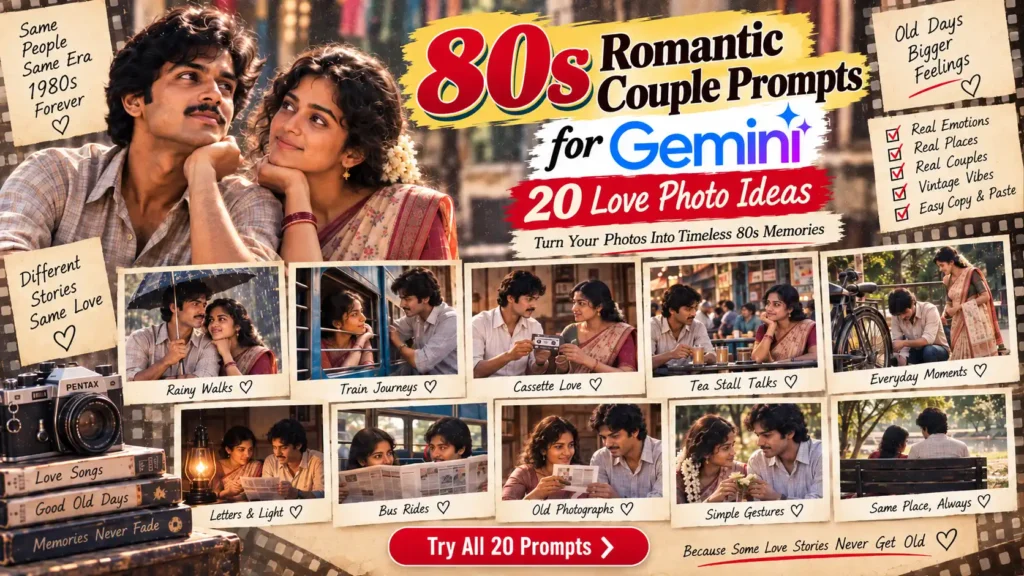
80s Romantic Couple Prompts for Gemini – 20 Love Photo Ideas
Copied!