1. 1982 Hand-Tinted Indian Studio Portrait
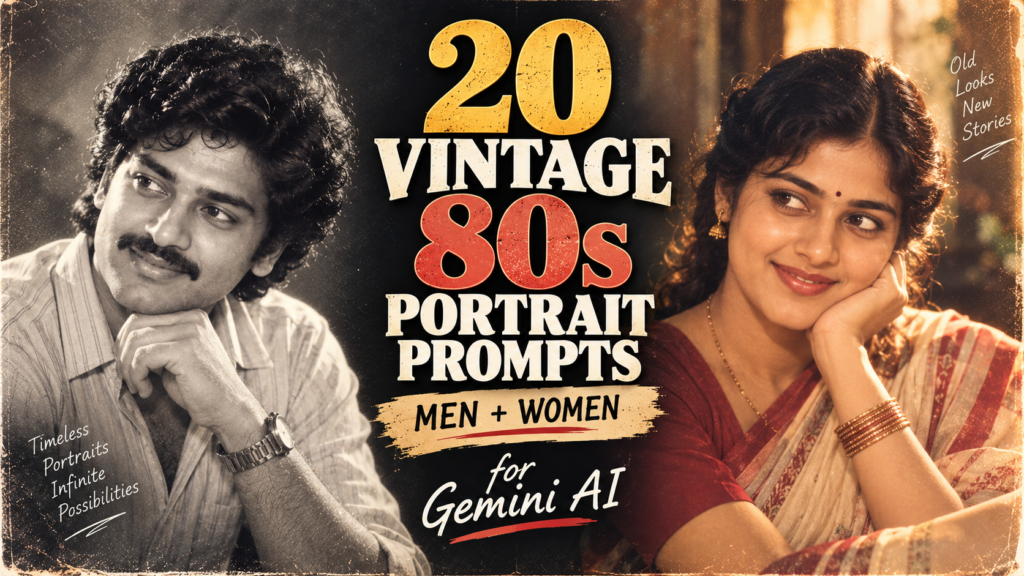
Use my uploaded photo as the strict identity reference and recreate me as a rare hand-tinted Indian studio portrait made around 1982. Preserve my exact recognizable face, facial structure, eyes, nose, lips, natural age, skin tone and individual proportions without excessive beautification. Give me an authentic early-1980s hairstyle and elegant period clothing naturally suited to my appearance. Build the portrait as though the photographer first created a high-quality monochrome studio print and an artist later applied extremely delicate transparent color by hand. The skin should retain genuine black-and-white photographic tonal depth beneath restrained peach and warm-brown tinting; lips, clothing and background may receive subtle period pigments, but never look digitally colorized. Seat me in a calm three-quarter pose against a softly painted studio backdrop with one simple wooden chair, using classic directional portrait lighting and natural catchlights. Preserve tiny human inconsistencies in the hand coloring: pigment may sit microscopically warmer along fabric folds or slightly softer near hair edges while the facial identity remains precise. Reproduce silver-based print texture, fine grain, matte paper fibers, gentle optical softness, rich shadow detail and restrained hand-applied color. No artificial sepia overlay, HDR, plastic skin, modern fashion or contemporary studio equipment. The finished image should make viewers hesitate for a second over whether they are looking at a color photograph or an exceptionally skilled hand-colored portrait preserved for four decades.
2. Expired 1980s Color Film Portrait
Transform my uploaded portrait into a photograph that appears to have been genuinely captured on slightly expired consumer color-negative film in India during the late 1980s. Preserve my exact facial identity, natural age, complexion, skin texture and body proportions. Style me with believable period hair and everyday 1980s clothing rather than theatrical retro fashion. Place me near a simple sunlit exterior wall with a few softly blurred leaves and ordinary residential details, allowing the photographic medium—not the location—to create the visual interest. Simulate physically believable aging film behavior: subtly inconsistent color response between highlights and shadows, gentle warm-red drift in selected midtones, slightly weakened blues, modest contrast loss, fine irregular grain and occasional restrained color-cloud texture. Keep skin believable and healthy rather than turning the entire image orange or green. Allow one edge of the frame to receive a very faint exposure variation as though the film roll aged unevenly, but never cover the face with damage. Use natural late-afternoon light and an unforced expression as though a family member casually took the photograph. No fake Instagram filter, heavy scratches, date stamp, light-leak cliché or exaggerated vignette. The result should look like an unusually beautiful frame from a real roll of film that spent several years forgotten in a drawer before being developed.
3. Tiny 80s Studio Photo Enlarged into a Portrait
Use my uploaded photo to create the visual character of a small Indian studio identification portrait photographed in 1985 and later carefully enlarged into a treasured personal print. Preserve my exact recognizable facial identity, natural age, complexion and facial proportions with extremely high accuracy. Give me a neat period hairstyle and simple formal 1980s clothing. Frame the original pose tightly from the upper chest upward against a plain softly graduated studio background, with shoulders almost square to the camera and the head turned only a few degrees. Use straightforward studio illumination typical of a skilled neighborhood photographer: one soft frontal key light, restrained shadow beneath the chin and small clear catchlights. The uniqueness must come from the enlargement process. Reproduce slightly enlarged silver-dye or color-negative grain, gentle loss of micro-detail at the extreme hair edges, subtle paper texture and the soft tonal transitions produced when a small negative is optically enlarged. Keep the eyes and defining facial features beautifully readable; do not intentionally blur the portrait. Avoid passport borders, official seals, readable text or modern biometric-photo aesthetics. No glamour retouching or digital sharpening halos. The final image should resemble the small photograph a family valued enough to enlarge, frame and keep on a wall for decades.
4. 80s Window-Light Transparency Film Portrait
Recreate my uploaded image as an exceptionally luminous 1980s portrait photographed on premium daylight-balanced transparency film, while preserving my exact face, natural age, complexion and recognizable identity. Style me with understated period hair and authentic 1980s clothing suited naturally to my appearance. Position me close to a tall wooden window inside a quiet Indian home, with my body turned partly toward the light and my eyes looking just beyond the camera. Let strong but soft morning daylight illuminate the window-facing side of my face while the opposite side falls into beautifully controlled shadow. In the background, allow only muted interior shapes and a hint of greenery beyond the window so the portrait remains dominant. Reproduce the distinctive discipline of slide-film exposure: luminous but protected highlights, rich natural color separation, deep clean shadows, fine tight grain and slightly higher micro-contrast than ordinary consumer negative film. Skin must remain realistic and nuanced, never oversaturated. Let colorful fabric show elegant period color richness without clipping. Avoid faded-photo effects, scratches, artificial light leaks and modern teal-orange grading; this photograph is not damaged or aged, only genuinely analog. The final portrait should look like a perfectly exposed transparency held toward daylight—crisp, rich and almost glowing from within.
5. 80s Direct-Flash Family Album Portrait
Use my uploaded photo as the identity reference and recreate me in the unmistakable visual language of a spontaneous Indian family-album photograph taken with a compact flash camera in 1988. Preserve my exact recognizable face, natural age, skin tone and proportions. Give me authentic period hair and attractive but ordinary 1980s clothing. Place me inside a lived-in family home during a small gathering, with patterned curtains, wooden furniture, a wall clock, flower decorations and relatives reduced to soft partial background shapes. Do not create a perfect portrait pose. Capture me turning toward the camera a fraction after someone unexpectedly calls my name, leaving one shoulder slightly angled and a genuine smile only halfway formed. Use direct on-camera flash as an intentional photographic characteristic: bright but realistic facial illumination, a small crisp shadow behind me, specular highlights in the eyes, faster light falloff into the room and darker ambient corners. Preserve natural skin texture rather than flattening the face. Simulate consumer color-negative film with visible fine grain, warm indoor color contamination and slightly imperfect white balance. Avoid red-eye, unless extremely subtle, and avoid making the flash harsh enough to look unattractive. No modern décor, phones or digital-camera aesthetics. The final image should feel technically ordinary but emotionally priceless—the kind of family photograph nobody planned and everybody kept.
6. Dreamy 80s Soft-Focus Formal Portrait
Transform my uploaded photo into an elegant formal Indian portrait photographed in the mid-1980s using a genuine optical soft-focus technique rather than digital blur. Preserve my exact facial identity, eyes, nose, lips, natural age and skin tone; the person must remain immediately recognizable. Give me beautifully arranged period hair and refined 1980s formal clothing appropriate to my appearance, with restrained jewellery if suitable. Place me against a deep neutral studio background with one subtle floral or fabric element far outside the main focus. Illuminate the face using a large diffused key light and delicate hair light. Simulate an optical diffusion filter or classic portrait lens that keeps the eyes, eyelashes and important facial contours readable while allowing bright highlights around hair, jewellery and fabric to develop a very gentle luminous bloom. Skin texture should remain visible beneath the softness; never use plastic beauty smoothing. Reproduce fine medium-speed film grain, smooth tonal transitions, rich blacks and warm restrained color. Keep the composition simple and timeless, with the head slightly turned and expression calm rather than theatrical. No modern glamour makeup, fake bokeh circles, digital Gaussian blur or excessive glowing skin. The finished portrait should have the flattering softness of an expensive 1980s studio photograph while retaining enough realism that viewers can see how the effect was created through light and optics rather than software.
7. Silver-Gelatin Black-and-White Character Portrait
Use my uploaded photograph to create a museum-quality black-and-white Indian character portrait as though it were photographed and printed by hand in a professional darkroom in 1981. Preserve my exact facial identity, natural age, facial structure and genuine skin characteristics without beautification. Give me a simple early-1980s hairstyle and understated period clothing with useful tonal texture. Place me against an almost plain dark background and photograph from slightly above eye level with my body angled away while my eyes return directly toward the lens. Use one large side light to sculpt the forehead, cheekbones and jaw naturally, with controlled shadow detail rather than crushed blacks. Translate skin tone into nuanced monochrome values with visible pores, fine hair and subtle expression lines. Reproduce true silver-gelatin print qualities: luminous midtones, deep neutral blacks, delicate highlight separation, fine organic grain and slight natural darkroom variation near the outer print edges. Avoid sepia, fake scratches, artificial paper tears or extreme contrast. The portrait should not look old because it is damaged; it should look old because its light, film response, printing method and human imperfection belong convincingly to 1981. The final image should feel strong enough to hang in a photography exhibition while still looking unmistakably like me.
8. 80s Four-Frame Photo Booth Personality Strip
Use my uploaded photo as the strict identity reference and create an authentic four-frame portrait strip as though I entered a rare mechanical photo booth in India during the late 1980s. Preserve exactly the same recognizable face, natural age, complexion, hairstyle and clothing across all four exposures; identity consistency between frames is essential. Use a plain curtain background and simple frontal booth lighting. Make each exposure capture a believable progression rather than four unrelated poses. Frame one: I sit properly and look toward the lens, unsure when the machine will fire. Frame two: the flash catches me slightly surprised. Frame three: I understand the timing and give a genuine relaxed smile. Frame four: I begin laughing because the photograph happens sooner than expected, creating the most natural expression of the strip. Maintain physically consistent head size, camera position, clothing and background across every frame. Reproduce slight exposure differences between shots, modest direct-flash highlights, consumer-film grain, narrow analog print borders and tiny mechanical alignment imperfections. Do not add readable booth branding, captions, dates, stickers or modern social-media styling. Avoid exaggerated funny faces. The finished strip should tell a miniature story in four photographs: a person gradually forgetting that a camera is watching.
9. Overexposed 80s Summer Film Portrait
Transform my uploaded image into a beautiful 1980s Indian outdoor portrait captured on consumer film during an intensely bright summer afternoon, preserving my exact face, natural age, skin tone and recognizable identity. Give me lightweight period clothing and an authentic everyday hairstyle. Place me in the open shade beside a sun-bleached wall while brilliant midday light floods the background. Simulate a photographer who intentionally or accidentally exposed the negative roughly half to one stop brighter than ideal, but make the result aesthetically beautiful rather than technically ruined. Allow the brightest wall and distant sky to approach creamy white while facial highlights remain just detailed enough to preserve natural skin. Let colors become slightly pastel, shadows open gently and fine grain remain visible within midtones. A soft reflected glow from the bright ground should illuminate beneath the eyes and chin naturally. Capture a relaxed squint or spontaneous smile appropriate to the heat rather than a studio expression. Include only minimal period environmental detail such as leaves, a bicycle edge or faded doorway. Avoid modern high-key studio aesthetics, fake lens flares, washed-out facial identity or digital haze. The final image should possess the accidental beauty of a summer negative that received slightly too much light and somehow made the memory feel even warmer.
10. Underexposed 80s Tungsten Night Portrait
Use my uploaded photo to create an atmospheric late-1980s portrait photographed at night on color film under ordinary tungsten illumination, while preserving my exact recognizable face, natural age, complexion and facial proportions. Give me authentic period hair and simple evening clothing. Place me near the entrance of an old Indian home, lodge or quiet street-side building where one tungsten bulb above a doorway provides most of the available light. Do not brighten the scene to modern digital standards. Simulate a film exposure roughly one stop darker than ideal: let the environment fall naturally into deep shadow while enough warm light reaches my eyes, cheek and hands to preserve identity and expression. Background details should emerge only gradually—a wooden door, railing, leaves and perhaps a distant practical lamp—rather than being uniformly visible. Reproduce the photographic consequences of low available light: slightly larger organic grain, warm amber highlights, subdued color in shadows, gentle halation around the bulb and modest softness without destroying facial detail. Capture me listening to or noticing something outside the frame, producing a quiet natural expression rather than posing. No neon lights, LED sources, modern cinematic color grading or artificial blue fill. The final image should demonstrate why imperfect darkness can make an analog portrait more intimate: the viewer sees only what the old film had enough light to remember.
11. 80s Medium-Format Formal Indian Portrait
Use my uploaded photo as the strict identity reference and recreate me as an exceptionally detailed formal Indian portrait photographed on a professional medium-format film camera in 1986. Preserve my exact recognizable face, natural age, complexion, facial proportions and individual features without excessive beautification. Give me an elegant but historically believable period hairstyle and formal 1980s clothing naturally suited to my appearance. Seat me slightly away from the background with my shoulders turned about thirty degrees while my face returns naturally toward the lens. Use a simple textured studio wall or hand-painted backdrop rather than elaborate scenery. Light me with a large diffused key source placed high and to one side, restrained fill from the opposite direction and a very subtle separation light around the hair. Reproduce the distinctive visual character of a large film negative: exceptionally smooth tonal transitions, detailed eyelashes and fabric weave, fine restrained grain, realistic skin pores, gentle depth of field and rich but natural color. The eyes must be critically sharp while ears and background soften gradually through real optical depth rather than artificial blur. Avoid modern beauty retouching, HDR, exaggerated bokeh or digital oversharpening. The final portrait should feel like the expensive photograph a family commissioned for framing in the main room—formal enough to last decades, but natural enough that the person still feels alive.
12. 80s Photographer’s Contact Sheet Selection
Use my uploaded photo to create a historically believable 1980s photographer's contact sheet containing twelve small consecutive portraits from one genuine photo session. Preserve exactly the same facial identity, hairstyle, clothing, age and setting across every frame; do not create twelve different people or unrelated looks. Photograph me beside a simple window or neutral studio wall while the photographer gradually searches for the strongest expression. Early frames should show tiny natural adjustments: looking down, fixing a sleeve, blinking, turning slightly, listening to direction and suppressing a smile. Middle frames become more relaxed. One later frame should capture an unusually beautiful spontaneous expression that clearly feels like the photographer's final choice. Maintain identical camera stock and lighting throughout, with only small changes in pose and expression. Present the frames as authentic miniature negative-derived proofs with narrow spacing, subtle exposure variation, real analog grain and modest edge markings that remain abstract and unreadable. Add one restrained grease-pencil circle around the chosen frame, as a photographer might mark a contact sheet, but no decorative scrapbook styling or modern graphic design. Facial consistency across all twelve images is critical. The result should let the viewer experience the photographer's decision-making process and understand why one fraction of a second became the portrait worth printing.
13. 80s In-Camera Double-Exposure Memory Portrait
Transform my uploaded portrait into an artistic but physically believable double exposure created entirely inside a 1980s film camera rather than through modern digital compositing. Preserve my exact recognizable face, natural age, complexion and facial structure. Give me simple period hair and clothing so the photographic technique remains the main visual idea. Use one exposure as a clean side-profile portrait against a dark background. Use the second exposure as a quiet 1980s memory environment—sunlit tree branches moving in the wind, an old house window, distant birds or another simple natural scene—carefully positioned so the brighter portions appear primarily within the darker silhouette and surrounding negative space. Keep both exposures optically plausible: overlapping highlights should become brighter, dark regions should retain more detail and no object should have modern cutout edges. Most importantly, keep my eyes, nose, lips and recognizable profile readable rather than burying the identity beneath texture. Reproduce one consistent film stock across both exposures with organic grain, gentle highlight bloom, restrained color and slight registration imperfection. Do not add typography, surreal galaxies, fantasy particles or Photoshop-style blending. The finished photograph should feel like a skilled 1980s photographer intentionally exposed the same frame twice to suggest that a person's memories can exist inside their portrait.
14. 80s Portrait Recovered from a Rain-Damaged Print
Use my uploaded photo as the identity reference and create a beautiful Indian portrait originally photographed around 1984, presented as a carefully preserved print that once suffered minor rain or moisture damage. Preserve my exact recognizable face, natural age, complexion and facial proportions with high accuracy. Style me in authentic period clothing and hair and place me in a simple shaded outdoor veranda with soft natural daylight. The original portrait itself should be strong, clear and emotionally warm: I am seated casually and looking toward someone beside the photographer with a small unforced smile. Then reproduce only restrained physical damage around nonessential outer areas of the old print—subtle waviness in paper, tiny water tide marks, slight emulsion color migration near one corner and a few softened background details. The face, eyes and main body must remain substantially intact and beautiful. Damage must obey paper and photographic-emulsion behavior rather than appearing as decorative digital texture. Preserve fine film grain, natural skin, period color response and matte print surface beneath the aging. No torn face, dramatic scratches, burned edges, fake vintage date or heavy sepia. The result should make viewers feel relieved that an important photograph survived: visibly imperfect as an object, but emotionally untouched where it matters.
15. 80s Dusty Window Natural-Light Portrait
Recreate my uploaded photo as a quiet Indian portrait photographed beside an old dusty window in 1983 while preserving my exact facial identity, age, natural skin tone and proportions. Give me understated period clothing and an authentic everyday hairstyle. Position me several feet inside a dim room near wooden window shutters whose glass has accumulated a thin believable layer of dust. Morning sunlight passing through the imperfect glass should create soft irregular patterns rather than clean studio illumination. Capture me standing close enough to the window that one eye receives a small luminous catchlight while the opposite side of my face remains gently modeled by reflected room light. A few suspended dust particles may become visible in the sunbeam, but never overwhelm the portrait. Let the exterior beyond the window dissolve naturally into bright greenery. Use realistic skin texture, individual hair strands, subtle window-glass diffusion, soft shadow transitions, fine medium-speed film grain and slightly restrained early-1980s color. Avoid artificial volumetric-light exaggeration, dramatic smoke, fake lens flare or digital skin smoothing. The final portrait should demonstrate how an ordinary imperfect window could become a photographer's entire lighting setup.
16. 80s Ceiling-Bounce Flash Indoor Portrait
Use my uploaded photograph to recreate me during a small Indian indoor gathering in 1989, photographed by someone using a professional flash deliberately bounced from a pale ceiling instead of pointed directly at my face. Preserve my exact recognizable identity, natural age, complexion and facial features. Give me authentic late-1980s hair and attractive period clothing suitable for a family celebration. Place me near a dining or living area with wooden furniture, flowers and a few softly blurred guests. Capture a spontaneous conversational moment when I have just turned toward the photographer and begin smiling, not a formal portrait pose. Simulate physically accurate bounced-flash behavior: broad soft illumination should descend from above and slightly forward, producing gentle shadows beneath the chin and nose, natural eye catchlights, evenly illuminated skin and enough ambient room light to preserve background depth. Avoid the flat harsh appearance of direct flash. Reproduce realistic film grain, warm tungsten contamination in distant areas, detailed fabric, natural skin texture and subtle late-1980s color-negative characteristics. No modern speedlights visible, smartphones, LED fixtures or contemporary décor. The result should look noticeably more polished than an ordinary family snapshot while remaining completely believable as a photograph made with skill rather than expensive modern equipment.
17. 80s Wedding Photographer’s Unnoticed Side Portrait
Transform my uploaded photo into an unusually beautiful candid portrait captured by a professional Indian wedding photographer in 1987 while the main ceremony is happening somewhere outside the frame. Preserve my exact face, natural age, complexion and recognizable identity. Dress me as an elegantly prepared wedding guest in authentic period clothing with appropriate hairstyle and restrained jewellery, but do not transform me into the bride or groom. Place me near the side of an old marriage hall where warm ceremonial light spills through an open doorway. I am temporarily away from the crowd, adjusting a flower, watch, sleeve or saree edge while looking toward the unseen ceremony. Capture the precise second my expression softens into a genuine smile at something happening in the distance, completely unaware that the photographer has turned the camera toward me. Use a moderately long vintage portrait lens so foreground decorations become soft shapes and the busy ceremony behind me dissolves naturally. Mix warm tungsten hall light with cooler daylight from a side opening. Reproduce realistic skin, fabric and jewellery, fine 35mm grain, subtle highlight halation and slightly rich wedding-film color. No modern wedding décor, LED walls, smartphones or exaggerated cinematic grading. The final image should feel like the unexpected photograph that becomes someone's favorite even though they were never supposed to be the subject.
18. 80s Travelling Village Photographer Backdrop Portrait
Use my uploaded photo as the strict identity reference and recreate me sitting for a portrait made by a travelling village photographer in South India around 1982. Preserve my exact recognizable face, natural age, complexion, body proportions and individual features. Give me authentic everyday period clothing and hairstyle appropriate to my appearance. Build a temporary outdoor portrait setup beneath the shade of a large tree or veranda: a hand-painted cloth backdrop hangs from a simple support, one wooden chair sits in front of it and an old box or medium-format camera stands several meters away. The painted backdrop may suggest an idealized garden, columns or distant landscape, but its brushwork should remain visibly handmade rather than becoming a real environment. Position me with the slightly formal posture people naturally adopted when photographs were uncommon, but let a tiny restrained smile break through the seriousness. Use soft open shade with a subtle reflector or simple flash appropriate to the era. Include a small edge of the backdrop stand or ground cloth so viewers understand the illusion. Reproduce realistic skin, cotton fabric, painted canvas texture, fine film grain and period color. No modern studio lights, digital cameras or luxury styling. The final image should preserve the wonderful contradiction of old travelling photography: an obviously painted fantasy background surrounding a completely real person.
19. 80s First Roll of Color Film Portrait
Transform my uploaded photo into a portrait that feels like it came from someone's very first roll of color film in India in the early 1980s. Preserve my exact recognizable face, natural age, skin tone and identity. Give me authentic period hair and simple colorful clothing chosen specifically because the amateur photographer is excited to see how colors will reproduce. Place me in a small garden or courtyard containing naturally distinct but believable colors: green leaves, a faded blue wall, one red flower and warm earth. The photographer is inexperienced, so make the composition slightly imperfect but charming: place me a little off-center, leave slightly too much headroom and allow one foreground leaf to intrude gently at an edge without covering the face. Capture a sincere smile directed toward the person behind the camera rather than a professional pose. Reproduce early consumer color-film characteristics with moderate grain, slightly uncertain exposure, rich reds, modestly cool greens and small variations in color balance while keeping skin natural. Do not degrade the image with scratches or artificial aging; at this moment the negative is new. Avoid professional studio depth of field, cinematic grading or technically perfect framing. The finished photograph should communicate the photographer's excitement: every ordinary color suddenly feels worth photographing because the film can finally remember it.
20. The 80s Negative That Was Never Printed
Use my uploaded image as the strict identity reference and create the extraordinary portrait that might have existed unnoticed on a forgotten 1980s film negative but was never selected for printing. Preserve my exact recognizable face, natural age, complexion, facial structure and identity with extremely high accuracy. Place me in a simple believable Indian environment around 1985 with authentic period clothing and hairstyle, but avoid an elaborate story or glamorous set. Imagine that the photographer was preparing for the intended portrait and pressed the shutter one frame earlier than planned. Capture that accidental frame: I am not yet looking into the lens, my posture is relaxed, one hand is still making a tiny adjustment to clothing or hair, and something said by the photographer has just caused a completely unguarded smile to appear while my eyes remain slightly off-camera. Use beautiful available side light and a modest vintage lens so the face is naturally dimensional and the background gently soft. Reproduce a clean, newly scanned 35mm negative with authentic fine grain, realistic color-negative latitude, detailed highlights, open shadows and tiny frame-edge imperfections only where appropriate. Do not display the image as a negative inversion; show the correctly developed positive photograph that could have been printed from it. No scratches, fake dates, typography, heavy fading or decorative nostalgia. The emotional idea is essential: the photographer originally chose another frame because this one was not the formal pose, but decades later this accidental expression would clearly have been the photograph worth keeping.
Some more you might like
1980s Indian Village Photo Prompts for Gemini – 20 Retro Looks
80s Retro Photo Prompts for Gemini – 25 Vintage Indian Styles
80s Family Photo Prompts for Gemini – 20 Indian Family Styles
80s Wedding Couple Photo Prompts for Gemini – 20 Retro Wedding Looks
80s Bollywood Photo Prompts for Gemini – 20 Indian Movie Looks
80s Romantic Couple Prompts for Gemini – 20 Love Photo Ideas
Copied!